Marco Silva
March 9, 2026

Peptide Tracking Done Right: A Safety-First System for Better Records and Better Clinical Conversations
Peptide interest has grown quickly across online communities, wellness groups, and performance-focused circles. With that growth came a familiar problem: more anecdotes, more strong opinions, and more confusion. Some people feel better and report positive changes. Others notice side effects, unstable results, or no meaningful change at all. Most people, however, run into the same practical issue—without structured tracking, it is hard to know what actually happened.
This guide is educational and non-diagnostic. It does not provide treatment plans, cure claims, dosing protocols, or individualized medical advice. Its purpose is to help you build a safer, clearer self-observation workflow so your data is useful to you and understandable to licensed clinicians.
If you use a peptide tracker well, you are not trying to “win” an argument online. You are trying to reduce guesswork, improve safety awareness, and make better decisions under uncertainty.
Why Tracking Matters More Than Most People Think
Human memory is selective. We remember standout days and forget context. That creates false narratives.
A structured tracker solves this by separating impression from observation. Instead of “I think this made me feel worse,” you can review when symptoms started, what else changed that week, how often the same pattern repeated, and whether there were clear confounders.
In practice, people who track consistently often discover symptoms began earlier than expected, sleep or stress explained most day-to-day variation, side effects clustered around specific lifestyle shifts, and temporary changes were mistaken for trends.
Core Principle: Observation First, Interpretation Second
Good tracking starts with neutral language. Write what happened before you explain why it happened.
When interpretation comes too early, you end up rewriting your own history. Keep raw observations clean. Add interpretation in weekly review notes.
The Minimum Effective Data Set
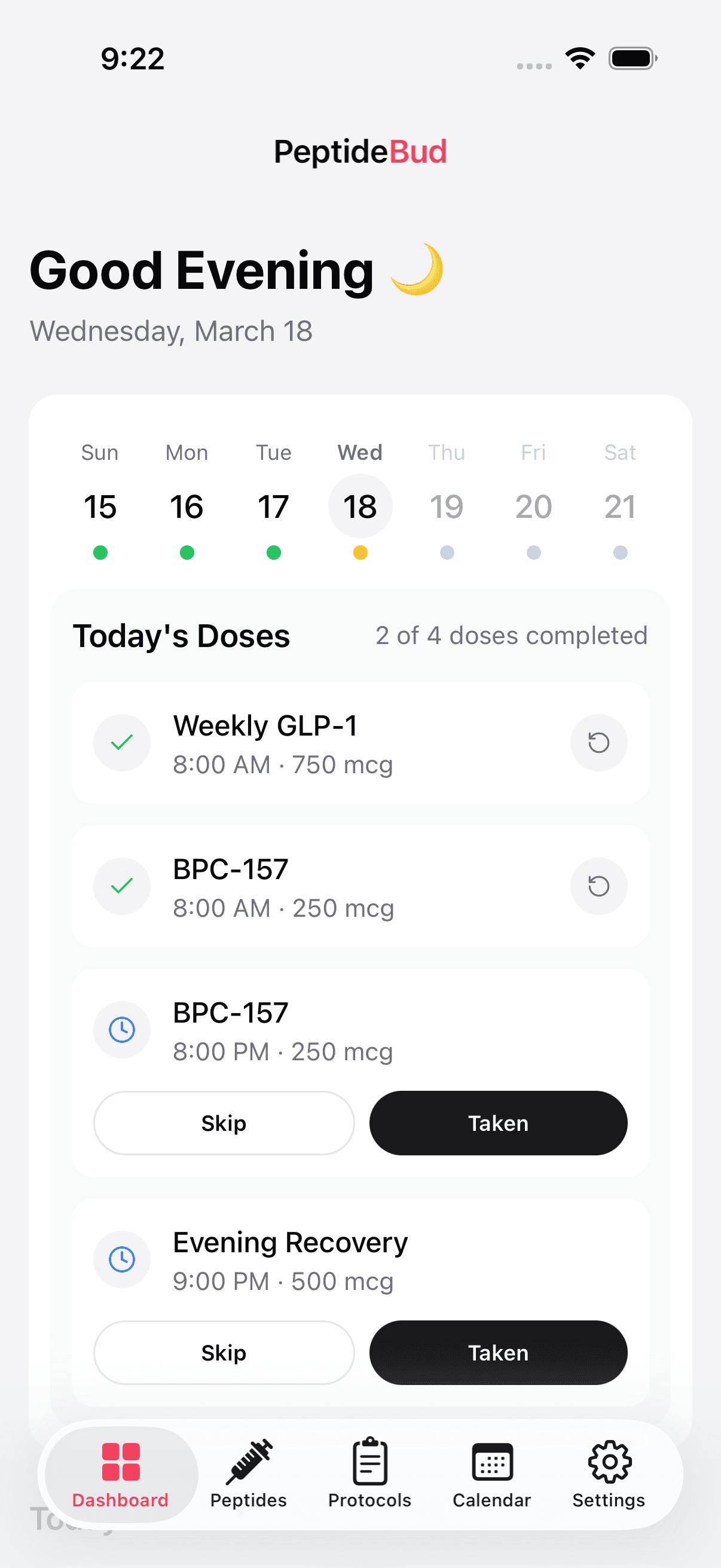
At minimum, track product metadata, timeline anchors, daily symptom scores, objective context signals, and dedicated safety notes. Keep a stable scale and consistent definitions so data remains comparable over time.
Build a Routine You Can Sustain
The best tracking system is the one you will still use in three months. Use a lightweight rhythm: daily entry (2–4 minutes), weekly review (10–15 minutes), and monthly summary (20–30 minutes).
Confounders: The Most Common Source of Bad Conclusions
Confounders are outside factors that mimic or hide effects. Common examples include poor sleep, alcohol, stress spikes, infection, intense training, new supplements, and travel disruption. A one-line context note each day can prevent major interpretation errors later.
Weekly and Monthly Review Discipline
Weekly reviews should answer what improved, what worsened, what stayed stable, whether side effects repeated, and whether any safety signal needs clinician input. Monthly summaries should compare baseline vs now, list unresolved issues, and include a confidence label (high/medium/low) based on confounding.
Red Flags and Escalation
Tracking is not a substitute for medical evaluation. If severe or concerning symptoms appear—such as chest pain, breathing difficulty, fainting, major neurologic changes, severe abdominal pain, or persistent vomiting—seek urgent professional care.
Clinical Communication
Bring concise data to clinicians: one-page timeline, symptom averages, current products and start dates, and focused questions. Lead with summary, then provide full logs if requested.
Data Quality and Privacy
Log at similar times each day, mark missing days, avoid rewriting old entries, and separate facts from interpretation. Protect records with passcodes, app locks, careful sharing, and encrypted backups.
Final Takeaway
A peptide tracker is most useful when used with consistency and humility. Better records reduce avoidable mistakes, improve safety awareness, and support clearer conversations with licensed clinicians.
Educational note: This article is informational only. It is not medical advice and includes no diagnosis, treatment instructions, dosing guidance, or cure claims.
Track your peptides. Download PeptideBud today.